Thin / Topped Tee Shot
A low, weak shot where the leading edge catches the top half of the ball, often skittering along the ground.
Why it happens
This happens when the club contacts the ball above its equator, usually from teeing it too low, standing up out of the shot, or trying to lift the ball into the air manually.
Possible causes in your swing, and how to fix each one
Tap any cause to see its fix. Work through them one at a time, usually one or two are the real culprit.
01
Tee height too low
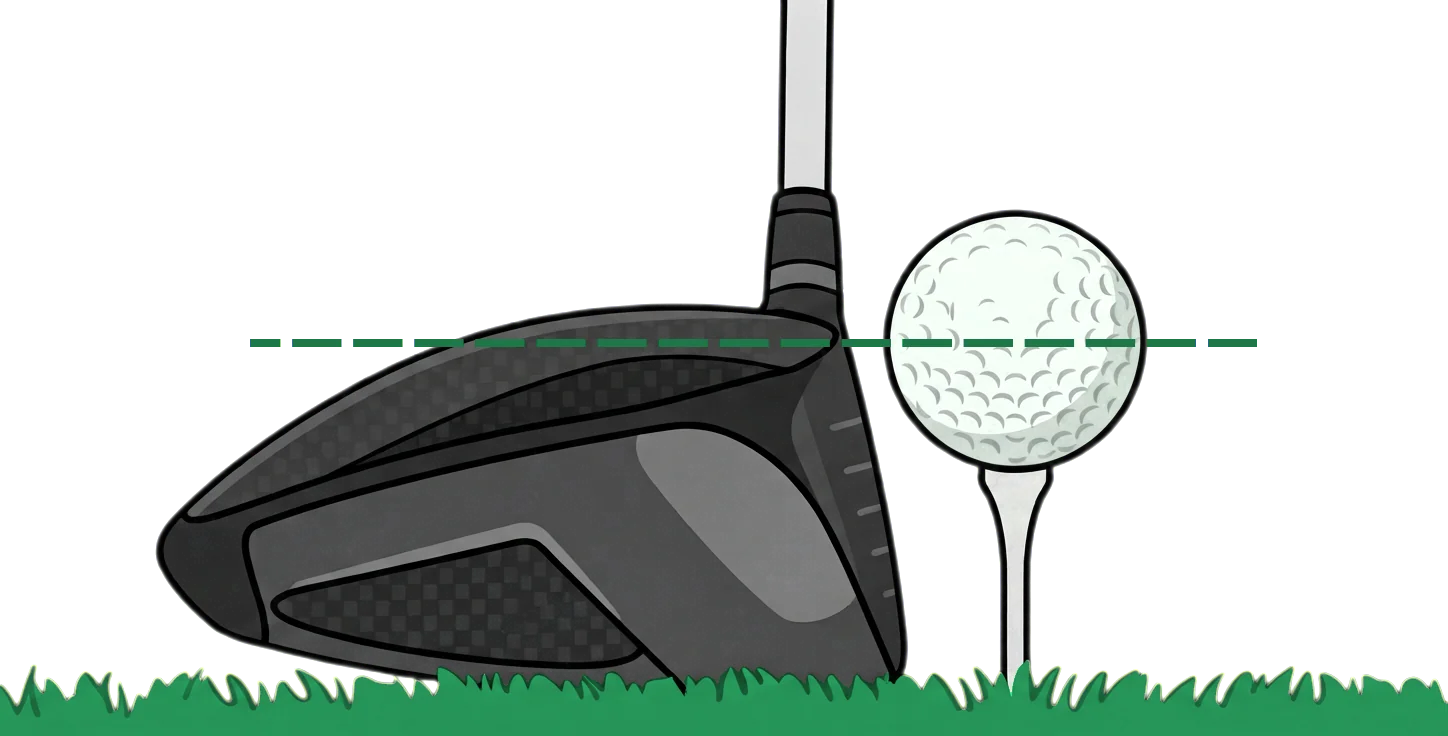
A driver is designed to be struck slightly on the upswing. If less than half the ball sits above the crown of the driver head, the club's upper edge can catch the top half of the ball even on an otherwise good swing.
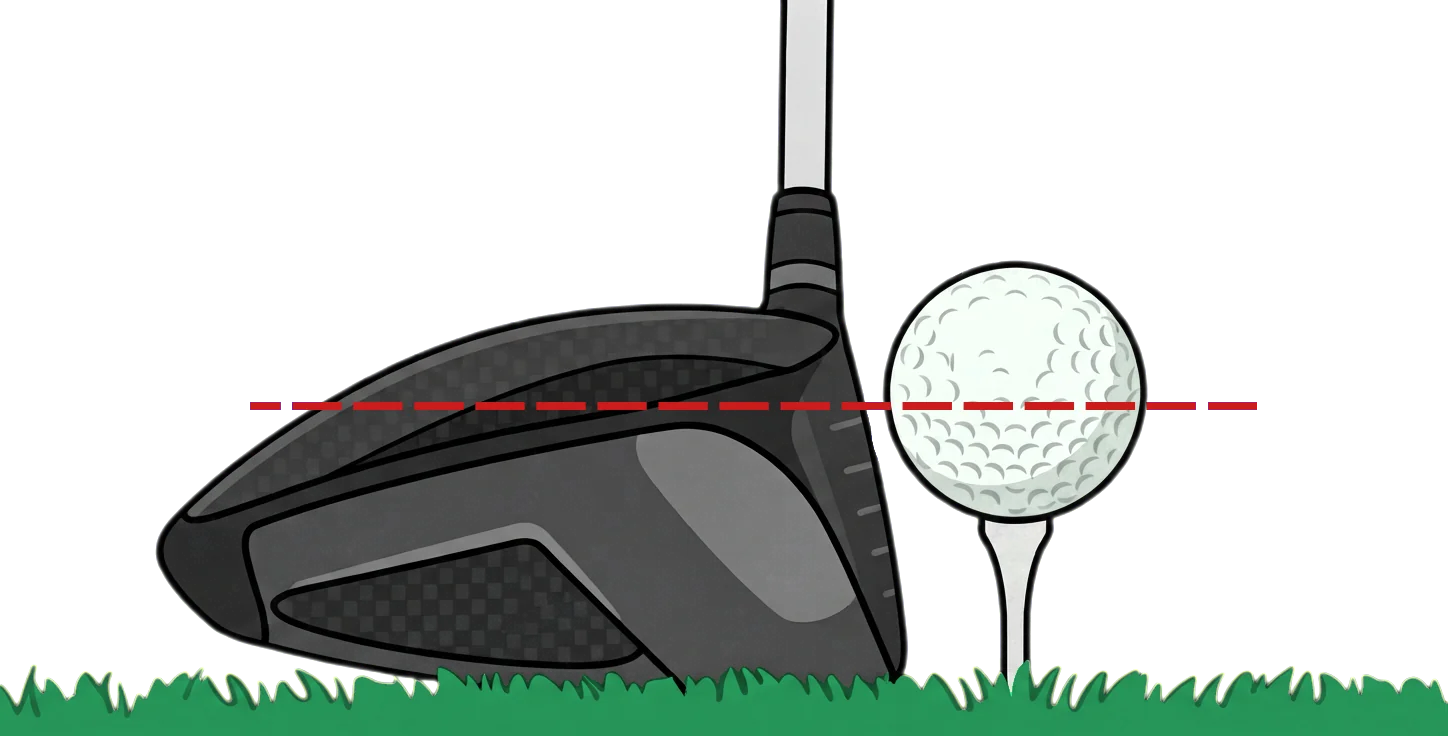
Tee the ball so roughly half of it sits above the top edge (crown) of the driver head.
02
Ball position too far back in the stance
Catching the ball too far back in your stance means you reach it before the club has started moving upward, the same low-tee problem but caused by setup position instead of tee height.
Move the ball forward, positioned off the inside of your left heel, the standard driver position.
03
Early Extension (standing up through the downswing)
Losing your spine tilt and rising up during the downswing raises where the club naturally bottoms out, leading to thin contact.
04
Trying to scoop the ball into the air
Actively trying to lift the ball with your hands and wrists gets in the way of solid, compressed contact.
Trust the club's loft and the tee height to get the ball airborne, focus your swing thought on rotating through, not lifting.
05
Grip pressure too tight
Excess tension creates a jerky, decelerating motion that's hard to time consistently.
Soften your grip pressure to roughly a 5 out of 10, and check for tension in your forearms at address.
Recommended video
DO YOU TOP YOUR GOLF TEE SHOTS? If yes, this will fix it
AskGolfGuru
How do you compare to the pros?
Average driving distance
A Thin / Topped Tee Shot costs distance directly, since the mishit steals ball speed that a clean strike would have kept.
Sources: PGA Tour driving distance, 2025 season average (about 303 yards); Arccos 2026 Annual Driving Distance Report, average male amateur (about 224 yards).
When to stop self-diagnosing
If you've genuinely worked through two or three of these causes over several range sessions and the miss keeps showing up, that's not a failure since it usually means the real cause is something you can't feel or see in your own swing. A single 30-minute lesson with a certified instructor, who can watch you hit balls, will find it faster than any website. Bring this page along and tell them what you've already ruled out; it'll save you both time.