Wind, Temperature, Rain, and Elevation: How Conditions Change Your Ball Flight
The same swing, the same club, the same ball, can fly 40 yards differently depending on the day. Wind, temperature, rain, and elevation each change your ball flight through real, measurable physics, not superstition, and knowing roughly how much lets you actually club correctly instead of guessing.
A 20 mph headwind can turn a 300-yard drive into 259 yards (-41), while the same 20 mph as a tailwind only adds about 33 yards (to 333), according to TrackMan-based testing. Wind isn't symmetric, and neither is how you should think about it.
See exactly why ↓Wind
Wind changes more than just how far the ball carries, it changes the shape of the shot. A headwind increases the relative airspeed over the ball, which increases both lift and drag, and the drag penalty outweighs the extra lift, so the ball balloons and comes up short. A tailwind does the opposite, but the relationship isn't a mirror image: because the effect on lift and drag isn't linear, a headwind costs you noticeably more than an equal tailwind gives back.
Real numbers from TrackMan-based testing on tour-level swings: a 20 mph headwind turns a 300-yard drive into roughly 259 yards, a loss of 41 yards, while a 20 mph tailwind only adds about 33 yards, to 333. On a 6-iron, testing at 20 mph found the headwind penalty is close to double the tailwind benefit.
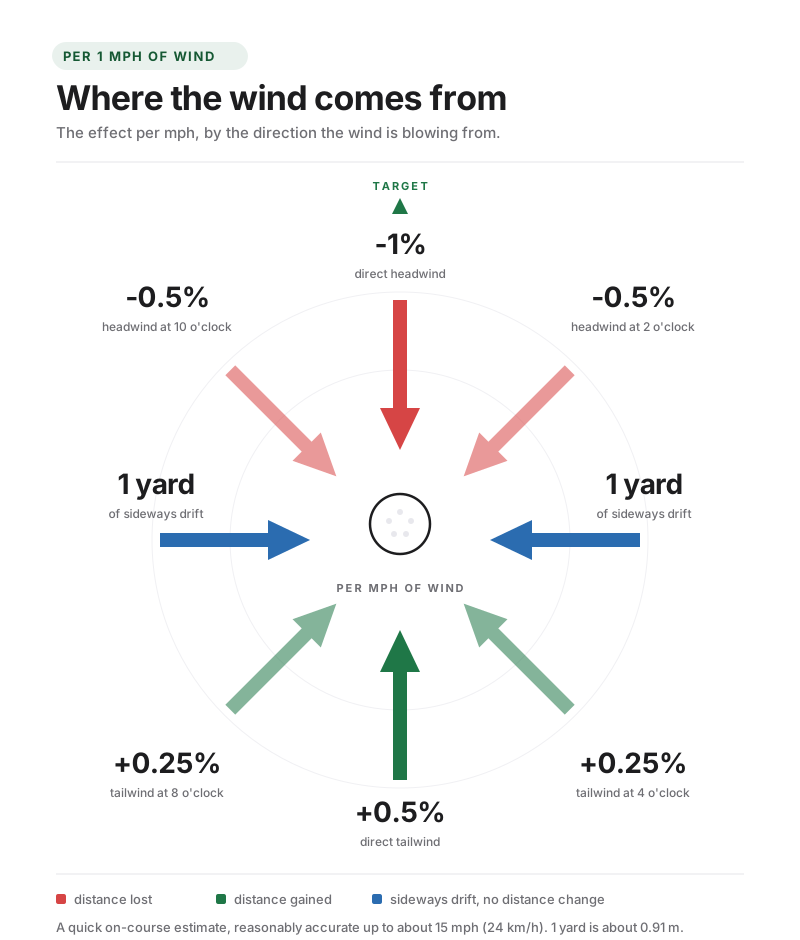
A quick way to estimate it on the course
You don't need a launch monitor to make a reasonable club adjustment. A commonly used field estimate: for every 1 mph of wind, adjust your distance by roughly 1% into a direct headwind, 0.5% into a quartering headwind, 0.5% with a direct tailwind, and 0.25% with a quartering tailwind. A direct crosswind, meanwhile, pushes the ball sideways by roughly 1 yard of drift per mph rather than changing your distance. This is a rough on-course shortcut, not a lab measurement, it holds up reasonably well under about 15 mph but understates how much the wind actually costs you as it gets stronger, since the real effect grows faster than a straight percentage once you're into 20+ mph wind.
Temperature
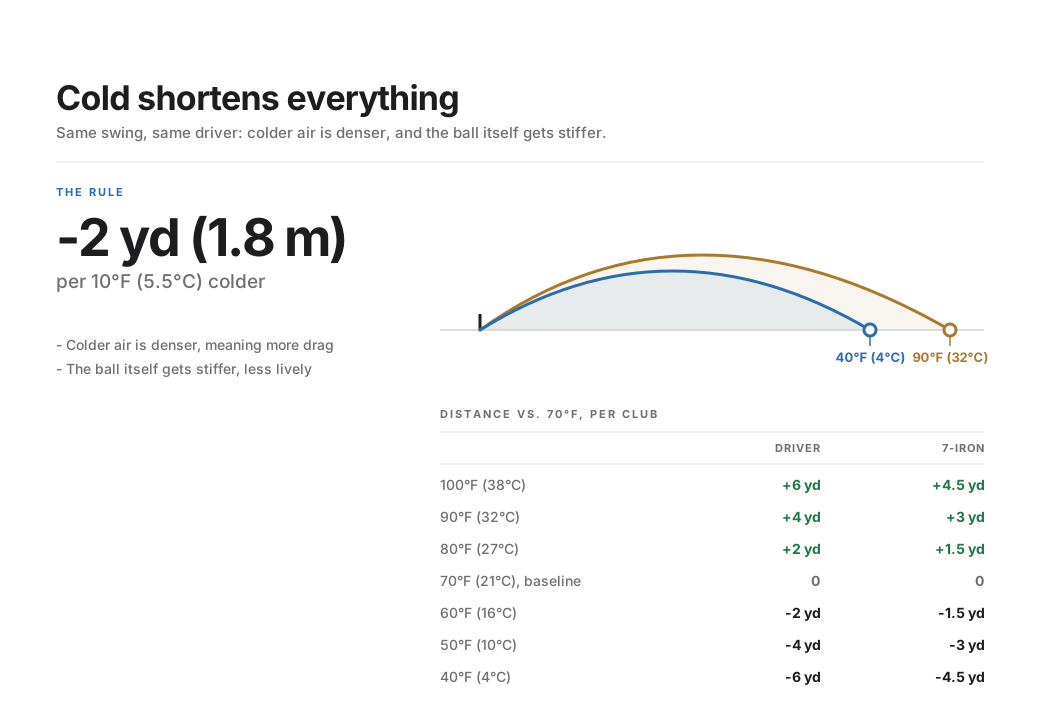
Cold costs you distance through two separate effects stacking on top of each other, not just one. Colder air is denser, which means more drag on the ball as it flies. Separately, the ball itself gets stiffer and less lively in the cold: a controlled study testing golf balls at temperatures from just below freezing up to 36°C (97°F) found the ball's coefficient of restitution, essentially how efficiently it springs off the clubface, dropped measurably in the cold, along with ball speed and carry distance, even with identical impact conditions.
The commonly cited rule of thumb for a driver is a loss of roughly 2 yards for every 10°F drop in temperature, with shorter clubs losing less since they generate less ball speed and spend less time affected by drag in the first place. It's a small number per shot, but it adds up: the difference between a 90°F August round and a 40°F November one can realistically cost a driver 8 to 10 yards of carry from temperature alone, before you even account for how a stiff, cold body swings differently.
Rain
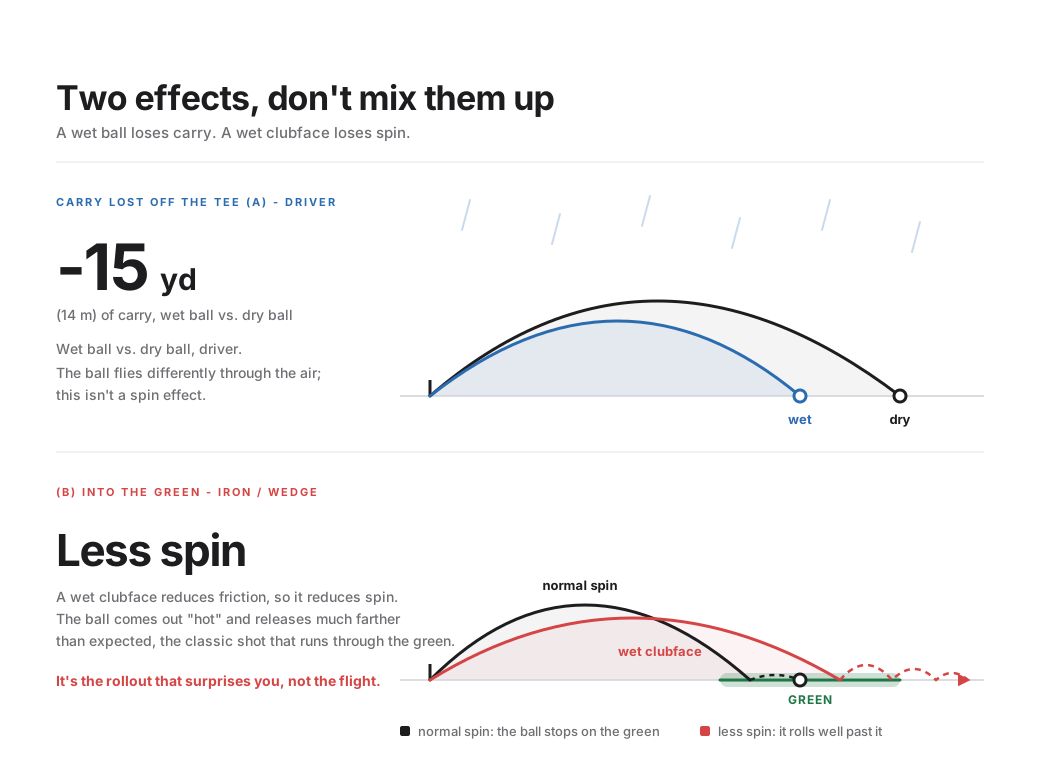
Rain affects your ball in two genuinely different ways depending on the shot, and they're easy to mix up.
Off the tee, a wet golf ball in flight behaves differently in the air than a dry one, water on the cover disrupts the airflow around the dimples. A study using TrackMan radar (Wood, Henrikson & Jones, published in the journal Golf Science, testing with a driver and golfers ranging from scratch to +3 handicap) found a wet ball flew noticeably lower and carried about 15 yards shorter than a dry ball hit with the same swing.
Into the green with a wedge or short iron, the relevant problem isn't the ball's flight, it's what happens at impact. A wet clubface, or grass and water trapped between the face and the ball, reduces the friction the grooves rely on to grip the ball and generate backspin. Less friction means less spin, which means the ball comes off lower and hotter than it feels like it should, and releases much farther than normal once it lands, the classic "flier" that sails the green.
Beyond the ball itself, wet fairways and greens also just stop the ball faster once it lands, less roll-out on drives, and less release on approach shots, which is worth factoring into club selection separately from the flight effects above.
What actually doesn't matter much: humidity
Humid air is commonly assumed to be "heavier" and to kill distance, it's the opposite, and the size of the effect is tiny either way. Water vapor is lighter than the nitrogen and oxygen it displaces in the air, so more humid air is actually slightly less dense. TrackMan data shows the difference between very dry air and very humid air changes a 6-iron shot by less than a yard. Rain matters because your ball and clubface get wet, not because the air itself gets heavier.
Elevation
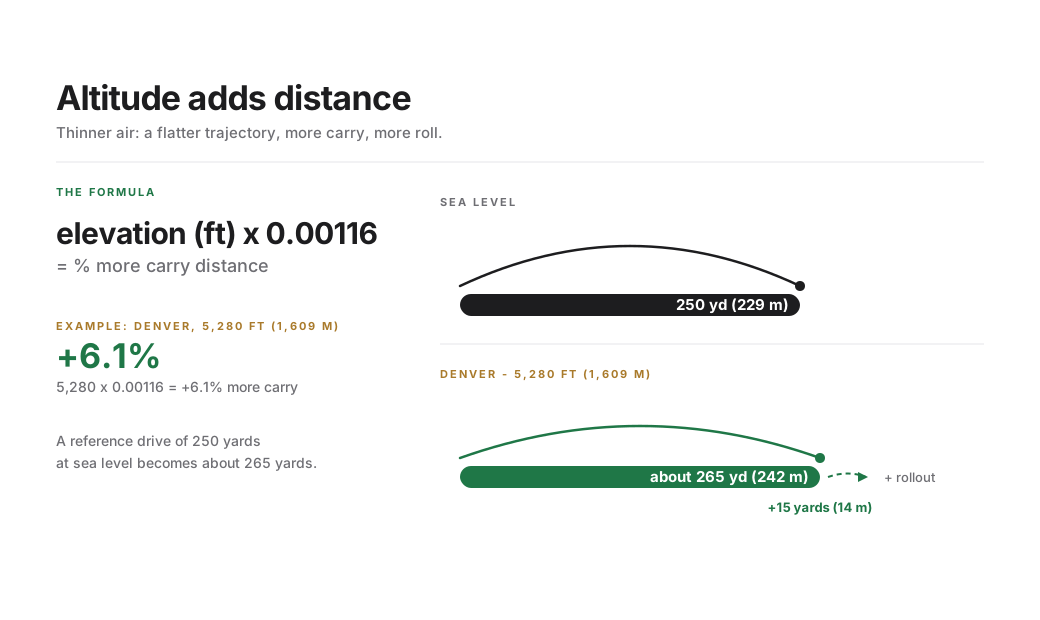
Higher elevation means thinner air, and thinner air means less drag working against the ball, so it carries farther, on a flatter trajectory with less spin-driven lift and less curve, and typically more roll once it lands. Titleist's own engineers publish a straightforward formula for the effect: multiply your elevation in feet by 0.00116 to get the percentage distance gain. At Denver's roughly 5,280 feet, that works out to about 6.1% farther, meaning a 250-yard sea-level drive would carry to roughly 265 yards at that elevation, an example commonly cited by fitters and equipment engineers alike.
That formula scales down cleanly for smaller elevation changes too, a course sitting at 1,500 feet adds roughly 1.7% (about 4 to 5 yards on a 250-yard drive), which is a real, if modest, factor worth knowing if you regularly play courses at noticeably different elevations.
Quick recap
- Wind isn't symmetric. A headwind costs you roughly twice what an equal tailwind gives back, because the relationship between wind speed and drag isn't linear.
- A rough field estimate for wind: about 1% per mph into a direct headwind, 0.5% with a direct tailwind, and roughly 1 yard of sideways drift per mph of direct crosswind, reasonably accurate up to about 15 mph.
- Cold costs distance two ways at once: denser air adds drag, and the ball itself gets stiffer and less efficient at transferring energy. Expect roughly 2 yards less per 10°F colder with a driver.
- A wet ball off the tee loses real carry distance, about 15 yards with a driver in testing, from how it flies through the air, not from spin loss.
- A wet clubface into the green is a different problem: less spin, not less carry, producing the low, hot "flier" that releases much farther than expected.
- Humidity itself barely matters, less than a yard of difference, and if anything, more humid air is slightly less dense, not "heavier."
- Elevation adds real distance: roughly 0.116% per 100 feet (Titleist's formula), about 6% at a mile of elevation like Denver.
Sources: TrackMan launch-monitor data on wind effects (as reported via Andrew Rice's TrackMan University testing); Wood, Henrikson & Jones, "Driver Ball Flight in the Rain," Golf Science, on wet-ball carry loss (PING R&D, TrackMan radar testing); a controlled study on the effect of temperature on golf ball coefficient of restitution and carry distance (published research, testing balls from -0.8°C to 35.9°C); Titleist engineering data on altitude and ball flight; TrackMan data on humidity's effect on carry distance.